Avril Coleridge-Taylor — The Seaford Composer Silenced by Apartheid
Avril Coleridge-Taylor conducted at the Royal Albert Hall in 1933, was the first woman to conduct the band of the Royal Marines, and flew to Johannesburg on the world's first commercial jet flight in 1952. On that same trip the apartheid government discovered her Black heritage and banned her from working, so she kept composing under the pseudonym Peter Riley. She spent her final years at Stone's House on Crouch Lane in Seaford, where a blue plaque now remembers her.
A Famous Name to Live Up To
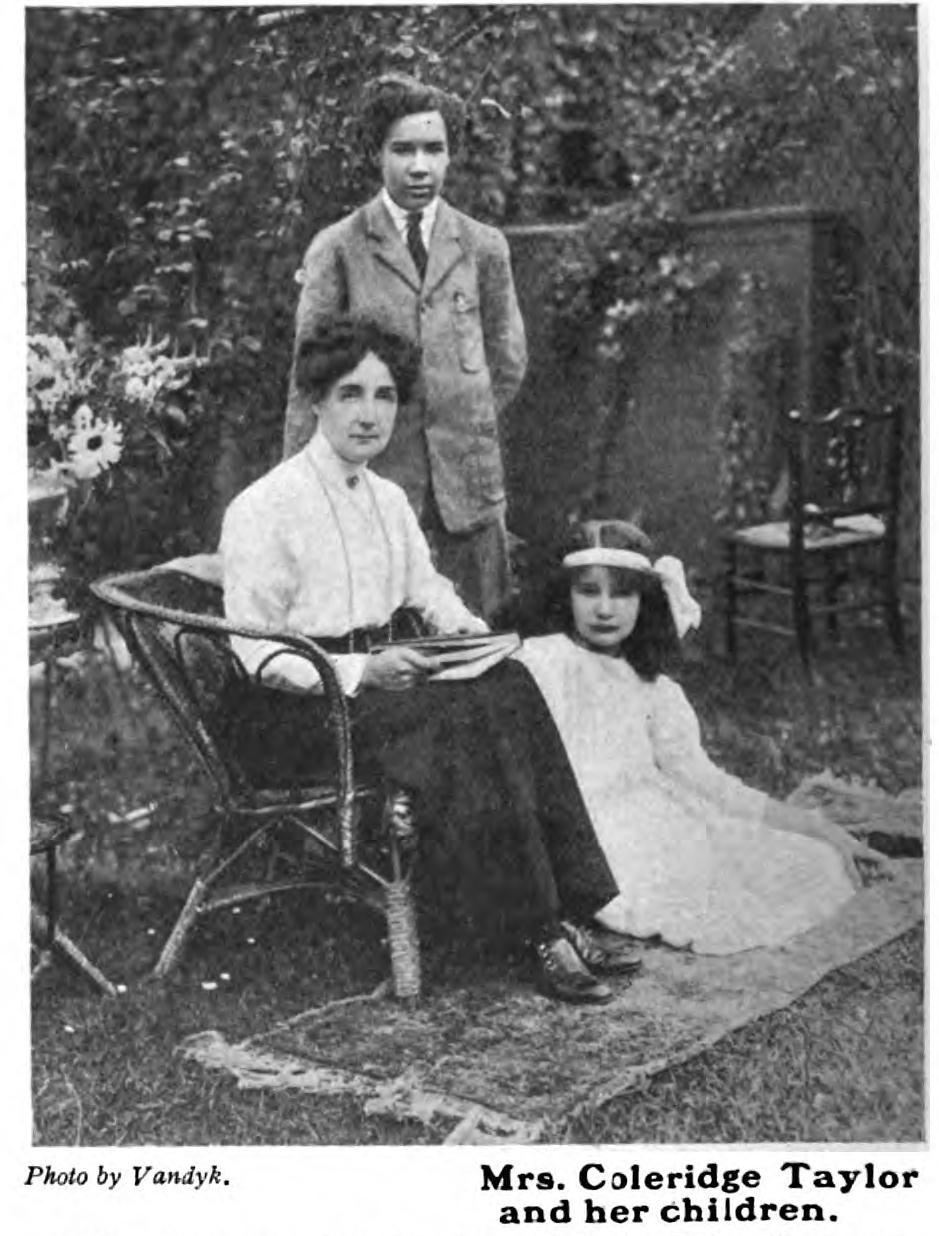
Gwendolen Avril Coleridge-Taylor was born on 8 March 1903 in South Norwood, on the southern edge of London. Her father was Samuel Coleridge-Taylor, the son of a Sierra Leonean Creole doctor and one of the most celebrated composers in Edwardian Britain. His cantata *Hiawatha's Wedding Feast* was so popular that for decades it rivalled Handel's *Messiah* in British choral programmes. Samuel died of pneumonia in 1912, aged just 37, when Avril was nine years old.
The daughter inherited the gift. She wrote her first composition, "Goodbye Butterfly", at the age of 12, and in 1915 won a scholarship in composition and piano to Trinity College of Music. There she studied composition and orchestration with Gordon Jacob and Alec Rowley, and learned conducting from three of the leading baton hands of the age: Sir Henry Wood, Albert Coates and Ernest Read.
Firsts at the Podium
In 1924 she married Harold Dashwood, though the marriage later ended in divorce and she worked professionally under her famous maiden name. Her first orchestral work, *To April* (1929), gave her a first taste of conducting when it was performed two years later, and in 1933 she made her formal conducting debut at the Royal Albert Hall.
The firsts kept coming. In 1938 she became the first woman to conduct at the bandstand in London's Hyde Park, and she was invited to conduct the Boston Symphony Orchestra. She was also the first woman ever to conduct the band of His Majesty's Royal Marines. In 1941 she founded the Coleridge-Taylor Symphony Orchestra, created in part to give wartime employment to musicians, and she later founded the Malcolm Sargent Symphony Orchestra and the New World Singers. She appeared as a guest conductor with both the BBC Symphony Orchestra and the London Symphony Orchestra.
Sussex shaped her music. She moved to Buxted, East Sussex, in 1939, and the county runs through her catalogue: *Sussex Landscape*, *The Hills*, and *Wyndore*, named for Windover Hill above the Cuckmere valley, as well as the wartime elegy *In Memoriam R.A.F.* (1945).
The Comet and the Ban
On 2 May 1952 Coleridge-Taylor boarded the world's first commercial jet airliner service: the BOAC de Havilland Comet from London to Johannesburg, routing via Rome, Beirut and Khartoum. She composed as she flew, and the journey produced her *Comet Prelude*. It should have been the start of a triumphant chapter. She settled into work in South Africa, conducting for the South African Broadcasting Corporation.
Then the apartheid state caught up with her ancestry. Officials had taken the fair-skinned Englishwoman to be white. When the government learned that her father was Black (under South Africa's racial classification system he would have been designated Coloured), her bookings were cancelled and she was barred from working in the country as either conductor or composer. The ban left her stranded and unable to earn, and the woman who had flown out on the first jet flight in history had to struggle her way home.
The Man Who Never Existed
Coleridge-Taylor knew all about writing under cover. As early as 1948 she had signed the choral piece *The Shepherd* with the name Peter Riley, a male pseudonym that let her music be judged without the double prejudice attached to a mixed-heritage woman composer. After South Africa she kept Peter Riley busy, continuing to publish under the invented name while concert programmers who might have balked at her own byline played the music anyway.
Her answer to apartheid was not retreat but defiance. In 1956 she formed a choir of performers of colour in Britain, and in 1957 she composed a *Ceremonial March* to celebrate the independence of Ghana, the first British colony in Africa to win its freedom.
Final Years at Stone's House
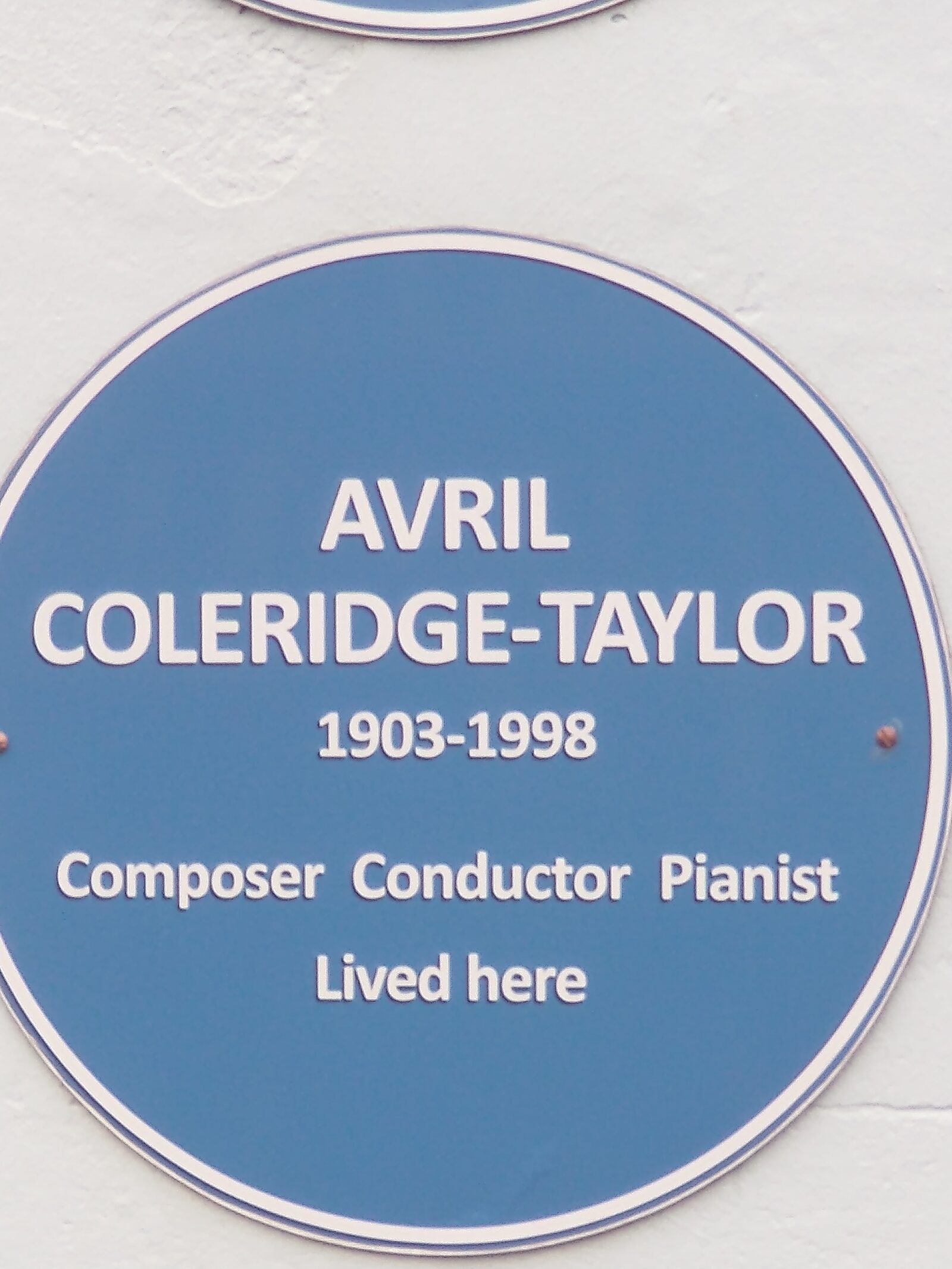
In 1979 she published *The Heritage of Samuel Coleridge-Taylor*, her biography of the father she had lost as a child. Her final years were spent on the East Sussex coast, and she died on 21 December 1998, aged 95, at Stone's House nursing home on Crouch Lane in Seaford. That same year a blue plaque was placed at Stone's House, one of the blue plaques that mark the remarkable lives threaded through the town's quiet streets.
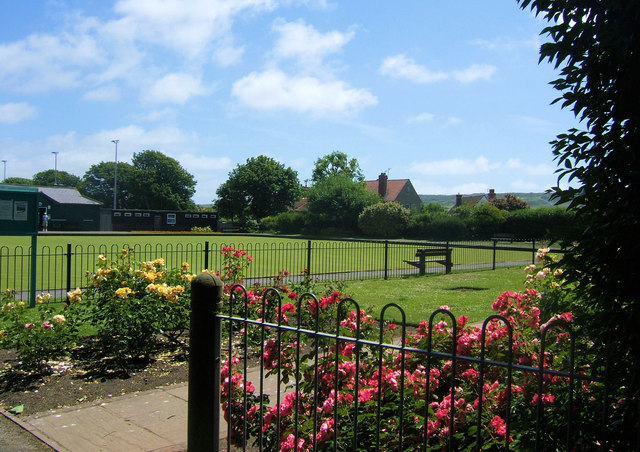
Walk up Crouch Lane today, past the gardens and the flint walls of Seaford's old town, and you pass the last address of a musician who conducted at the Royal Albert Hall, flew into the jet age on its very first flight, and refused to let a racist state silence her. When it tried, she simply kept composing. Peter Riley saw to that.
Sources
- Avril Coleridge-Taylor, Wikipedia
- Meet Samuel Coleridge-Taylor's daughter Avril, a trailblazing conductor, composer and pianist, Classic FM
- Program Notes for Avril Coleridge-Taylor's Comet Prelude, Dr Sarah Whitfield
- Avril Coleridge-Taylor: Life & Works, Multitude of Voyces
- Project archive: `Thoughts-Ideas-Expansion/archives/seaford-sussex-co-uk.md` (Seaford's Blue Plaques, seaford-sussex.co.uk)